


For Book Clubs & Small Groups
Joyful, Anyway: A Discussion Guide
A free guide for reading Joyful, Anyway with friends, your book club, or your Sunday school class.
Over the past couple of months since Joyful, Anyway came out, I’ve been hearing from so many of you—reading with a pen in hand, underlining whole pages, texting quotes to friends, or gathering in living rooms (or group chats) to discuss.
Which is beyond my greatest hope.
It’s a book that asks difficult questions and disrupts easy-to-swallow cultural cliches. It is meant to interrupt you a little. To shake you out of whatever happiness pressure you’re under. To remind you there is so much to mourn, so much ache we have to live with, and yes… so much joy to remind us that life is still worth loving (no matter how imperfect it is).

So I thought it might be helpful to create a discussion guide for anyone who wants to read along with friends, host a book club, or have better, more honest conversations along the way.
These questions aren’t meant to have a right or wrong answer. They are written as invitations—to notice, to remember, to say something you might not usually say out loud.
If you’re gathering people together, I hope this gives you a place to start. And if you’re reading on your own, maybe it helps you linger a little longer in the parts that matter most.
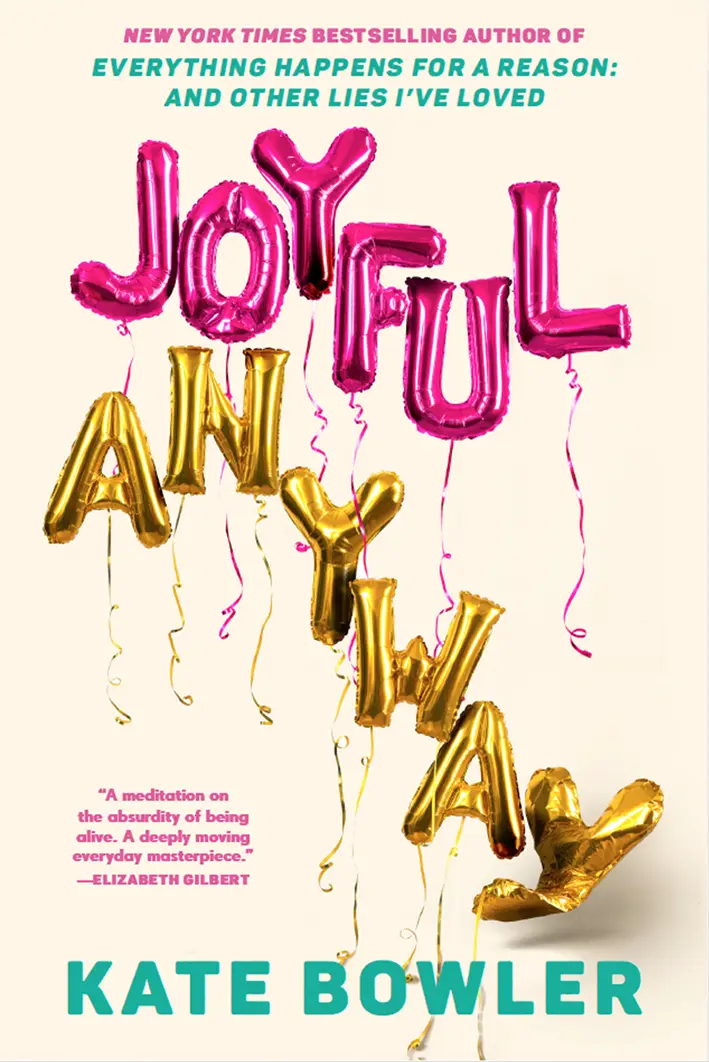
Haven’t Read It Yet?
Start with the book.
A profound, funny, and deeply human case for joy that doesn’t depend on everything getting better. Grab a copy, then bring these questions to your group.
01
Naming “The Ache”
- The book describes “the ache” as less an emotion and more a question—often starting with “Will I ever…?” Where does that question show up most in your life right now?
- Bowler suggests that even in relatively “good” lives, there’s a persistent sense of not-enoughness. Have you experienced that? Why do you think that is?
- Which descriptions of the ache (longing, restlessness, unfinishedness) felt most accurate—or most uncomfortable—for you?
- The book pushes back on the idea that life can be optimized or solved. Where have you seen that pressure in your own life or in the wider culture?
- How do you tend to respond to the ache: distraction, productivity, relationships, control, humor? What works—and what doesn’t?
02
Suffering, Loss, and Honest Emotion
- Bowler critiques “toxic positivity.” When have you experienced someone trying to fix your pain with platitudes (or when have you done that to someone else)?
- The book suggests that mental health includes feeling what is appropriate to a situation, not just feeling good. How does that reframe your understanding of emotional well-being?
- There’s a tension between wanting meaning in suffering and accepting that some things simply have no explanation. Where do you land in that tension?
- Bowler writes from personal experience with illness and uncertainty. How does her story shape the credibility of her message about joy?
- What does it look like to make space for grief without letting it define everything?
03
Joy—What It Is (and Isn’t)
- The book distinguishes joy from happiness—joy can coexist with sorrow, while happiness often cannot. How does that distinction change how you think about your own experience of joy?
- Bowler describes joy as something that appears unpredictably, even in ordinary moments. Where have you seen that in your own experience?
- What are your “microjoys” today—small, seemingly insignificant moments that still feel meaningful?
- The book suggests joy is not something you achieve but something you notice or receive. Do you agree? Why or why not?
- How does the idea that joy doesn’t eliminate suffering—but sits alongside it—challenge cultural expectations about happiness?
04
Cultural Scripts & Resistance
- The book critiques the idea that “everything happens for a reason” or that positivity guarantees outcomes. Which cultural messages about success or happiness do you find hardest to let go of?
- Bowler describes modern life as full of optimization, self-help, and pressure to improve. Where do you feel that most acutely?
- If joy is not about having more (success, control, certainty), what does it require instead?
05
Living “Joyful, Anyway”
- The phrase “joyful, anyway” suggests a kind of defiant posture toward life. What do you think that posture looks like in practice?
- If you took one idea from this book seriously for the next month, what would you experiment with changing—or noticing—differently?
- What has shifted in how you understand joy by the end of this book?